
Held at: | Private Collection |
Reference: | RS |
Source: | Original research |
Title: | Guest Contribution: The Monnow Valley Railway – A proposal from 1865 |
Place name: | Ewyas Lacy |
Date: | 1810 - 1876 |
Description:
This article describes transport developments on the southern borders of Ewyas Lacy in the nineteenth century that would later play a part in the story of the Golden Valley Railway. It first appeared in the Quarterly Journal of the Abergavenny & District Steam Society in August 2025, and is reproduced here with the kind permission of the author.
Ewyas Lacy Study Group
The Monnow Valley Railway
A proposal from 1865
By Lee Holland IEng MICE MRailEI
The first rail transport to reach Monmouth was the Monmouth Railway, authorised by an Act of Parliament in 1810. This was a horse-drawn tramroad from Coleford down to the eastern side of the River Wye, formed of flanged plates at a gauge of 3’ 6”. Monmouth would have to wait until 1857 before steam powered traction on standard gauge rails arrived.
In 1847, the South Wales Railway started work on boring a tunnel under Gibraltar House and placed the excavated material on the meadow between the future Troy Station and the River Wye. This would have been a Monmouth branch of the broad-gauge railway then under construction from Gloucestershire to Pembrokeshire. A branch was proposed from Newport to Monmouth where it would meet a separate branch from Grange Court via Ross. Work was suspended in 1848 and the branch from Newport was never completed by the South Wales Railway. The abandoned works became a cause for concern amongst local landowners as the embankment was on a flood plain and obstructed the movement of water when river levels rose.
The Coleford, Monmouth, Usk and Pontypool Railway was established in 1853 and formed a branch off the Newport, Abergavenny and Hereford Railway at Little Mill. The first section from Little Mill Junction was opened as far as Usk on 2 June 1856. A tunnel just north of Usk Station delayed progress to the north but the line opened to Monmouth on 12 October 1857, with a second tunnel under Gibraltar House, originally started by the South Wales Railway. This was the end of the branch and the only station in Monmouth at that time. However, in 1861, the line was extended over a 20-arch stone viaduct on the flood plain of the River Wye and a single span girder bridge over the river itself. This extension reached only as far as the village of Wyesham on the eastern bank of the river but would later become the northern end of both the Wye Valley Railway from Chepstow and a branch from Coleford along the route of the earlier tramroad.
|
|
| 1880 Map of Monmouth Troy |
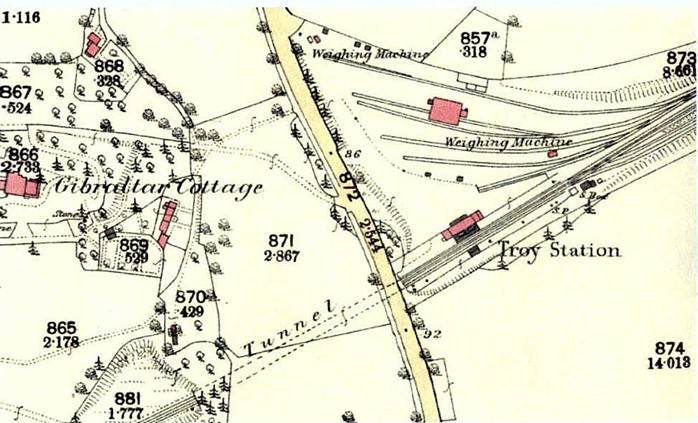
In 1865, the Ross and Monmouth Railway obtained its Act of Parliament and opened a new Station at May Hill, on the eastern side of the Wye, on 4 August 1873. An extension over the Wye to the original station, now named Monmouth Troy, was opened on 1 May 1874, using the embankment that had been built in 1847.
While the Ross and Monmouth Railway were literally getting their Act together in 1865, another company was formed with the intention of connecting Monmouth with Pontrilas, on the Abergavenny to Hereford line which was by then part of the Great Western Railway. This line would be 12½ miles long and pass through some very scenic but mostly unpopulated countryside. One of the directors of this new venture was Crawshay Bailey, a shrewd businessman with interests in ironmaking, coal mining and numerous railways in south Wales, including the CMU&PR. An engineer, Thomas Curley, was appointed, surveys were undertaken and plans drawn up of the proposed route.
|
|
|
|
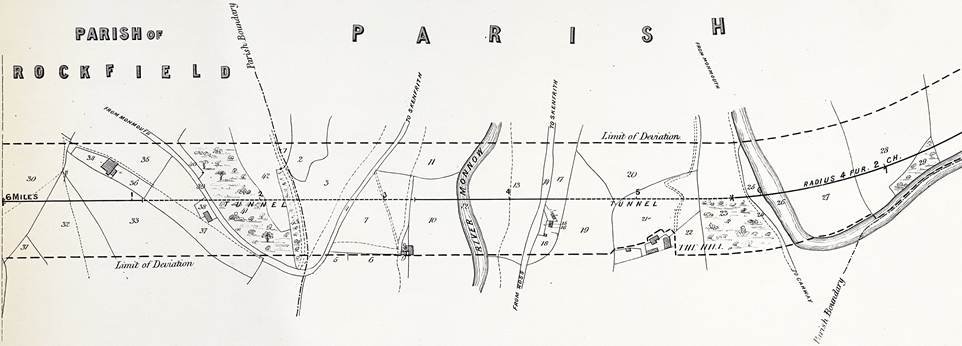
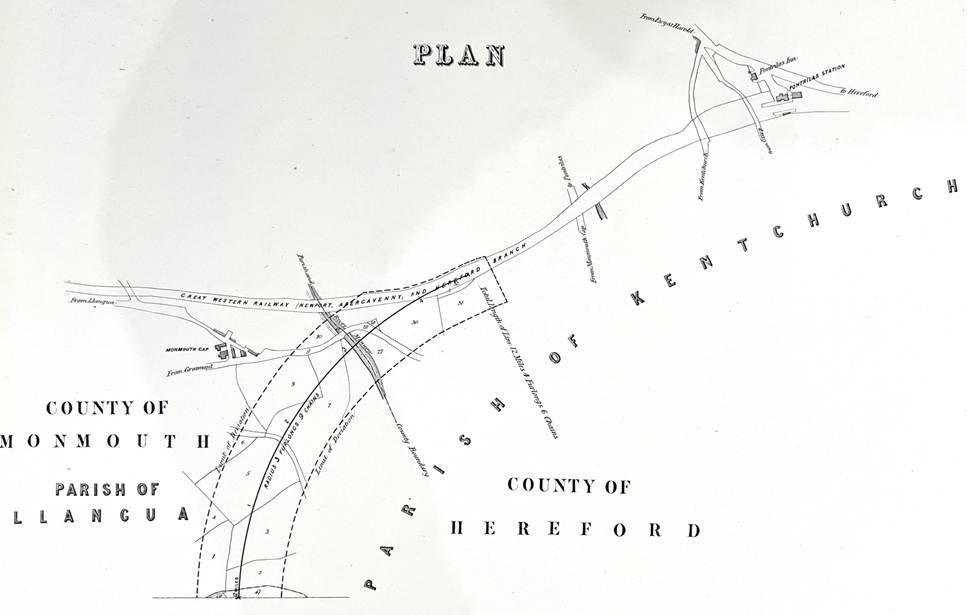
| Plans and map of the proposed route of the Monnow Valley Railway [click on the map to view a higher definition image] |
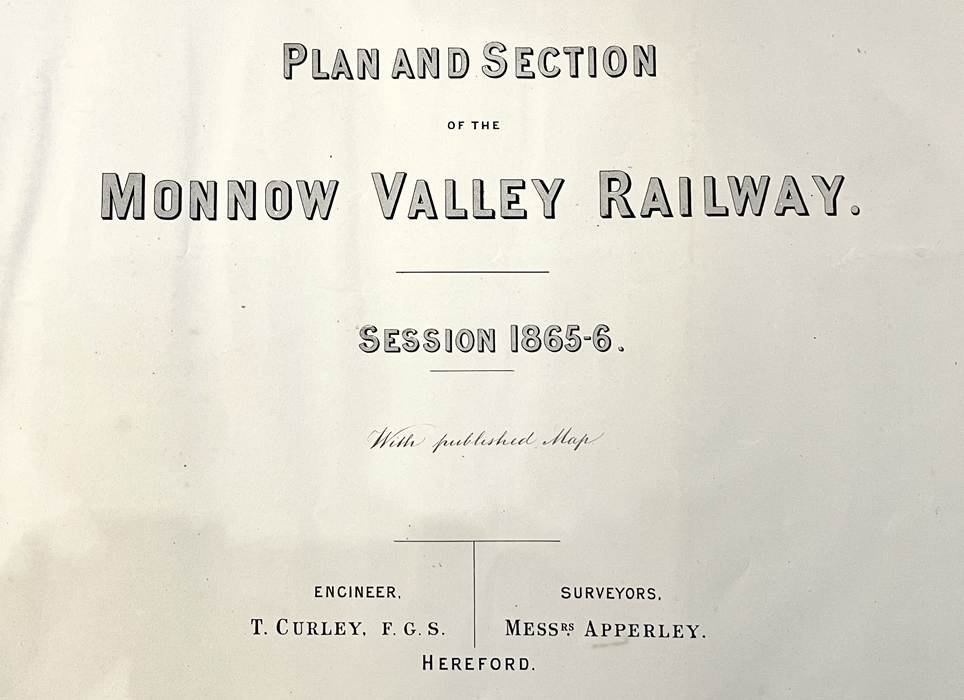
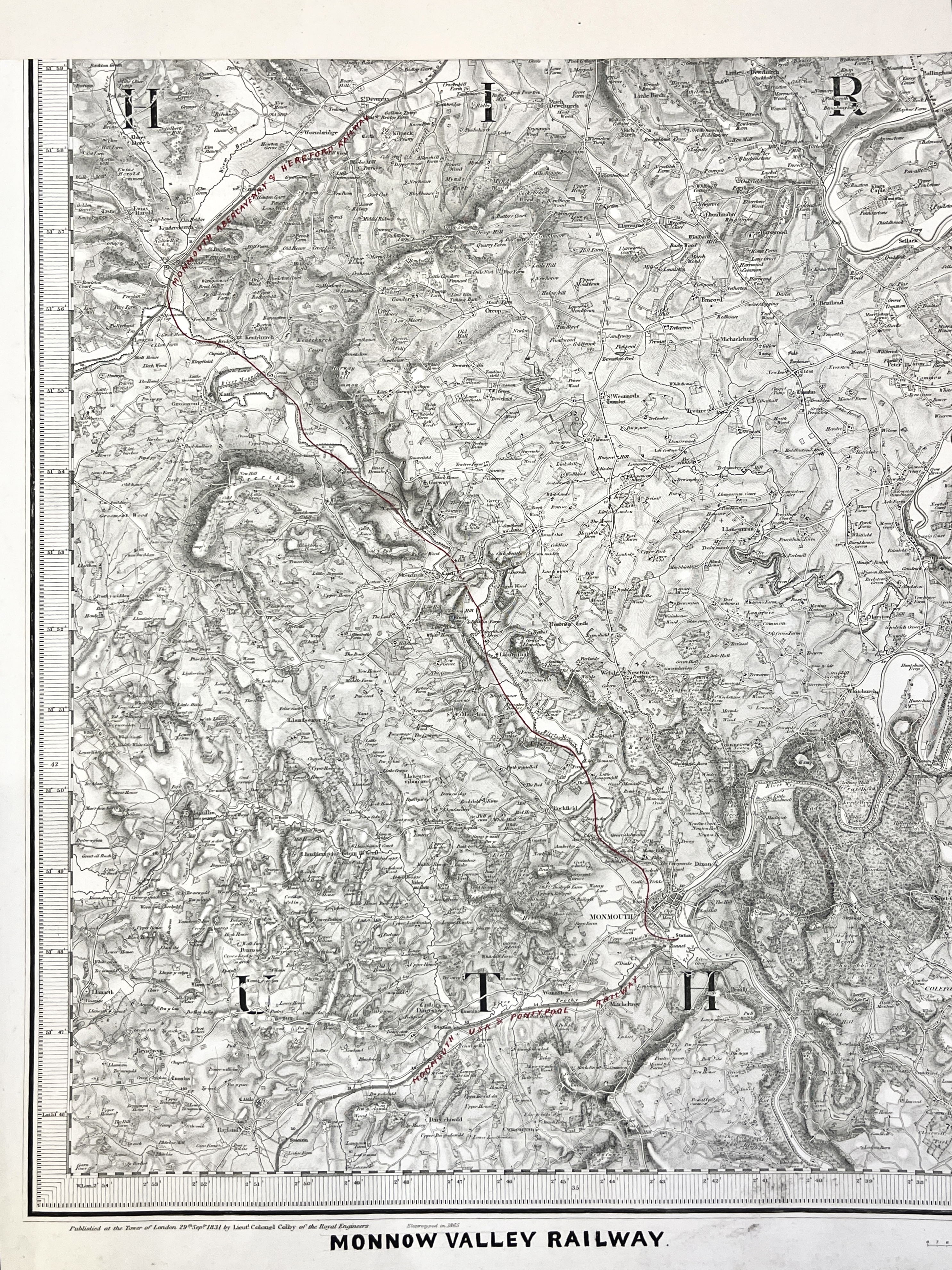
The line would begin at a junction just beyond the north eastern end of Troy Station which would mean that a separate platform would have had to have been built for the new branch. It then branched away to the west, turning sharply to the north west where it would pass under the Monmouth to Raglan road.
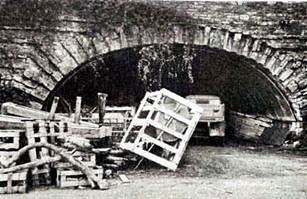
This section of the proposed line has been the subject of an urban myth that a tunnel would have been necessary and a filled-in arch can still be seen in the retaining wall supporting the old alignment of the road. However, the arch was simply a bridge under the road. It is far too shallow for a tunnel with very little cover between the top of the arch and the surface level of the road above.
|
|
|
|
| View of realigned road in 2025 showing junction with later portal Road (on the left). The infilled arch is out of view on the right. The proposed route was between Portal Road and the end house. |
| Infilled arch bridge beneath old course of Raglan Road. Please note this is now private land |
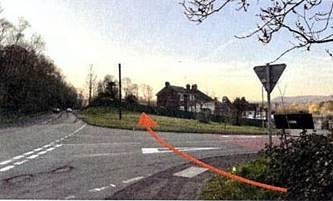
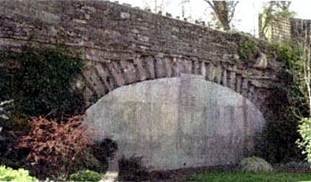
The direction of the proposed line and the surrounding topography suggests only a shallow cutting would have been required as the line skirted the lower slopes of the hill immediately west of Troy Station crowned by Gibraltar Cottage and St Dial’s Wood. The line to Usk went in a different direction that required a short tunnel under the hill.
|
|
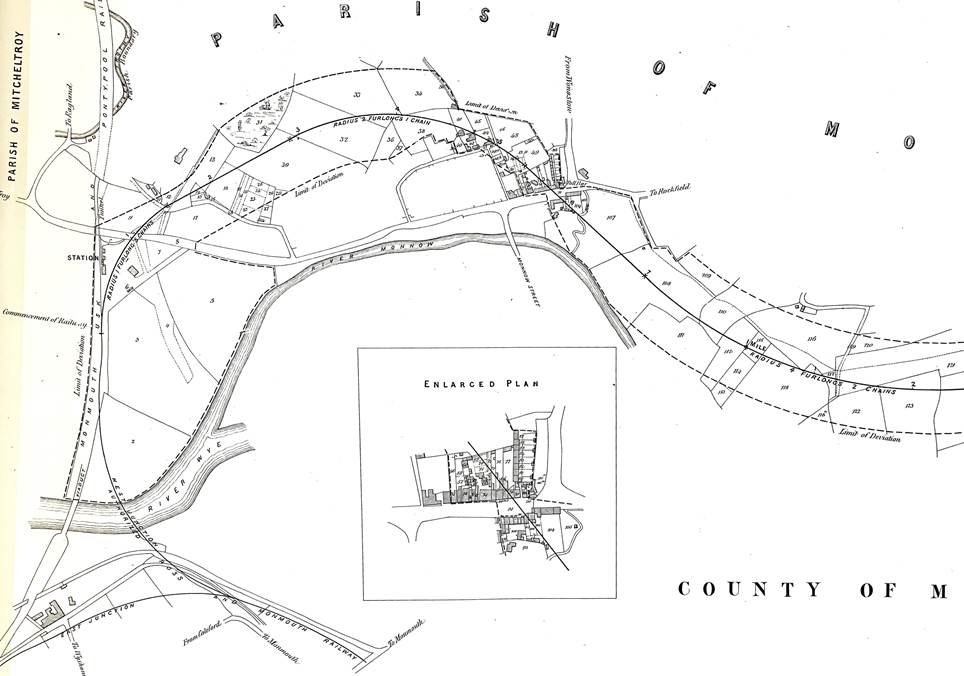
The proposed line then followed the alignment of an ancient earthwork known as Clawdd Du (Black Dyke), a medieval moat, before turning north to pass over Drybridge Street. Had the line been built, several houses on each side of the road would have had to have been demolished for the line, on an embankment, to have been constructed with a 35-foot span bridge passing over the street at a skewed angle.
|
|
| Plan accompanying the Act of Parliament. The railway was proposed to cross Drybridge Street on a skewed arch bridge. |
|
|
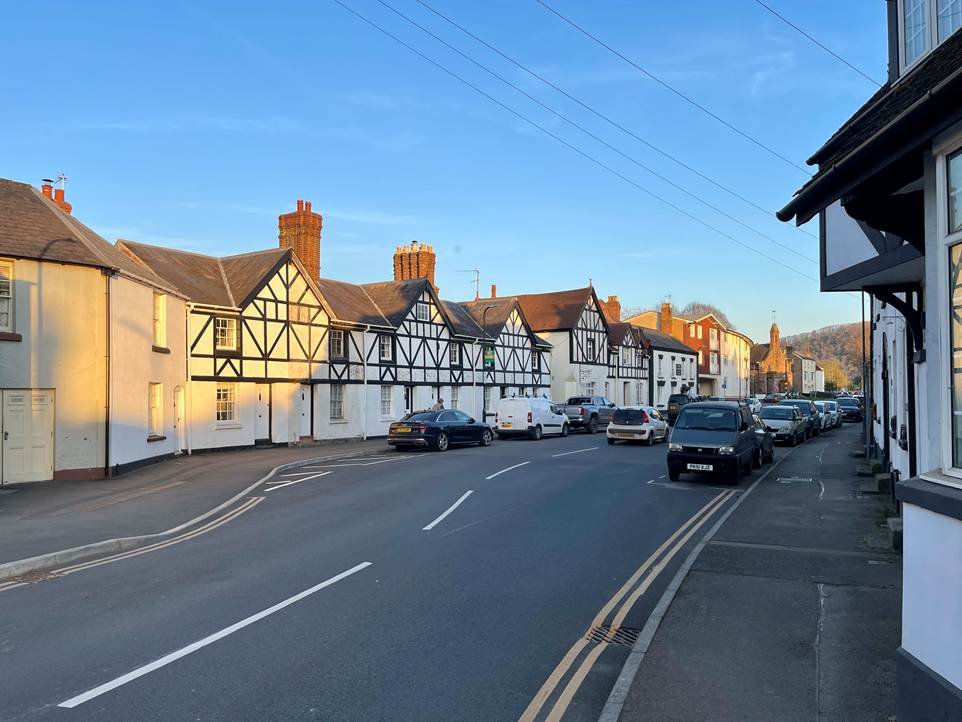
| Looking east along Drybridge Street. These houses were built during the early nineteenth century and would have been swept away if the Monnow Valley Railway scheme had been built. The railway would have crossed the road on a 35 foot skewed arch bridge. All the buildings in this view are grade II listed. |
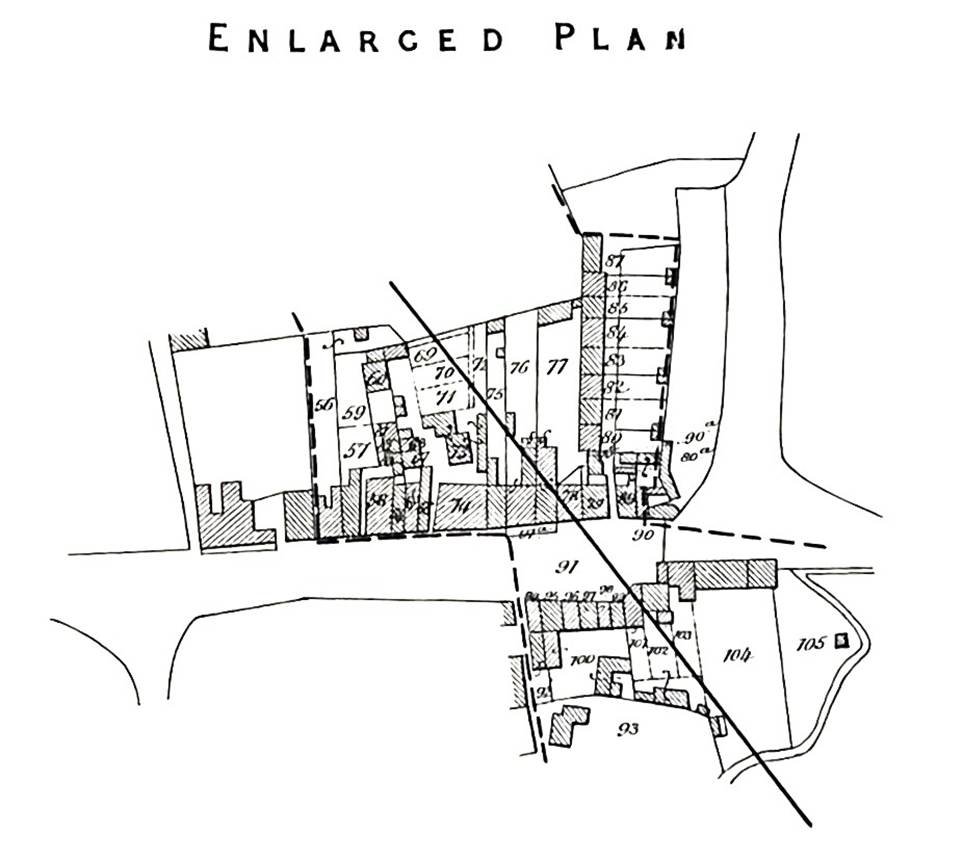
Having cleared the built-up area, the line would then have passed through Vauxhall Fields and headed north west, roughly following the course of the River Monnow. It would pass by Pwllholm (which became the Royal Engineers’ railway training ground), Ancrehill and Rockfield, where it would have crossed the river twice, half a mile from the village. It then would have followed the western side of the Monnow through sparsely populated farming country before crossing the river two more times on the approach to Skenfrith.
The first tunnel on the branch would have been 475 yards long under Coed Angra Hill on the eastern side of Skenfrith. Upon exiting the tunnel, the line would cross the Monnow on a 60-foot single span bridge then the main Skenfrith to Ross road before entering a second tunnel, 275 yards long, under The Hill. On exiting the second tunnel the line would pass over a minor road and then cross the Monnow again on another 60-foot span bridge.
|
|
The line would then follow the western bank of the Monnow until the approach to Grosmont where it would cross to the eastern bank. At Great Corras, the line would cross the Monnow once more and again follow the western bank passing through Cupid’s Hill, half a mile downhill from Grosmont and finally reaching Llangua, or Monmouth Cap as it was known back then. Here it would turn north, cross the Monnow one final time on a 60-foot arch bridge alongside the main Hereford road bridge then cross the road itself on a 35-foot arch bridge. A junction would be formed with the Newport Abergavenny and Hereford line so that trains could access Pontrilas Station, half a mile to the north.
|
|
The financial crisis of 1866 had wide ranging consequences, particularly on prospective railway companies. Crawshay Bailey sold his Aberaman estate to pay off his debts and investors became much more cautious about risking their capital in speculative schemes. The Monnow Valley Railway scheme was shelved as there was little prospect of it ever making any money in such a remote area.
The idea was resurrected 10 years later when a meeting was held in Grosmont in 1876. Local landowners were keen on the idea of the railway but the scheme was again shelved until the Golden Valley Railway announced their intention to extend their line from Pontrilas to Monmouth. These schemes would take different routes through Rockfield and Monmouth and will be looked at in more detail in a later article.
Ref: rs_ewy_0368