
Title: | The Rolling Stock, Infrastructure and Operations of the Golden Valley Railway |
Date: | 1876 - 1970 |
Editor’s Note
This paper has been produced almost entirely through interrogating Copilot, Microsoft’s AI engine. The responses generated by it form the bulk of the text and some of the images, and are largely from unspecified sources. They have been reproduced with only relatively minor editing, correction and additions where known historical facts dictated. Care should be taken with the content accordingly; the material should not be assumed to be strict historical fact as AI programs in their current state can be prone to inaccuracies and distortions, some of which have been noted as editorial comments in the text. That said, the overall picture is broadly in accord with known documentary records and research evidence from more conventional studies.
Bob Steele
Ewyas Lacy Study Group
The Rolling Stock, infrastructure and Operations of the Golden Valley Railway: 1876 -1970
INDEX
| 1 | The Wooden Stations |
| 2 | The Stone Outlier |
| 3 | The Tin Tabernacle |
| 4 | The Track |
| 5 | The Signals |
| 1 | Fares |
| 2 | Working the line |
| 3 | The timetables |
| 4 | Ticketing |
| 5 | The Pontrilas Ammunition Storage Depot |
Introduction
During its independent, pre-GWR years (from its authorization in 1876 until its sale to the Great Western Railway in 1899), the Golden Valley Railway Company suffered from profound financial problems and was operated, after a fashion, largely by people with little experience of running a railway. As a result, the nature of its rolling stock, infrastructure and operations is amongst the more bizarre in British railway history. After the takeover by the GWR the professionals moved in and matters stabilised, at least for a while. But times change and the railway was forced to change with them. This is its story.
The Locomotives
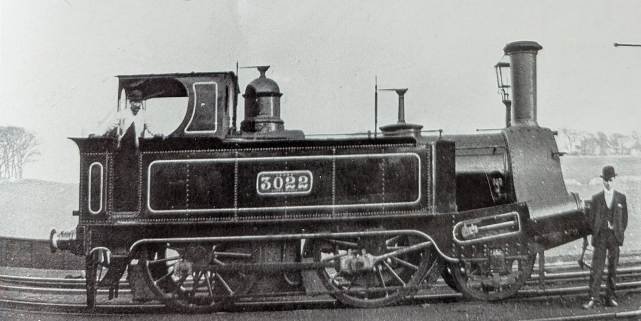
The Golden Valley Railway Company locomotive fleet was a patchwork of hired contractor engines, unreliable second-hand machines, and briefly borrowed or rented equipment. The first locomotive operated by the Company was one that had been retired from the London and North Western Railway and sold into industrial/ contractor use in August 1873 - former LNWR No. 15. An Allan-designed Crewe Goods 2-4-0, it was purchased by civil engineering contractors Scott & Edwards and subsequently hired out to work on the construction and early operations of the Golden Valley Railway around 1877. It was tasked with handling materials and initial light traffic on the newly laid line running from Pontrilas into the valley.
Upon entering service with the GVR Company, the locomotive is said to have been renamed “Lady Cornewall”. This would have been a highly deliberate and local homage to the wife of the Reverend Sir George Henry Cornewall of Moccas Court, who famously cut the very first sod of earth to begin construction of the Golden Valley Railway in August 1876 and was a significant shareholder in the enterprise.
|
|
| An LNWR Crewe Goods 2-4-0 locomotive of the type used on the Golden Valley Railway |
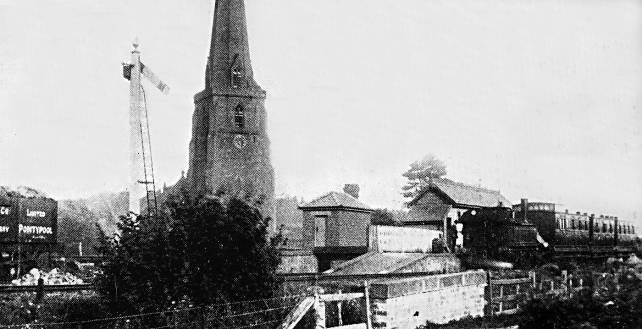
A surviving photograph from the very early days of the railway shows what appears to be the “Lady Cornewall” at Peterchurch Station hauling the three passenger carriages owned by the Company at that time.
|
|
| GVR Passenger Service at Peterchurch Station in the late 1800s with what appears to be the “Lady Cornewall” pulling the Company’s Oldbury passenger carriages |
The engine was eventually withdrawn, perhaps on completion of the construction of the Golden Valley line, and is believed to have moved on to other construction projects, later working on the construction of the Nottingham Suburban Railway.
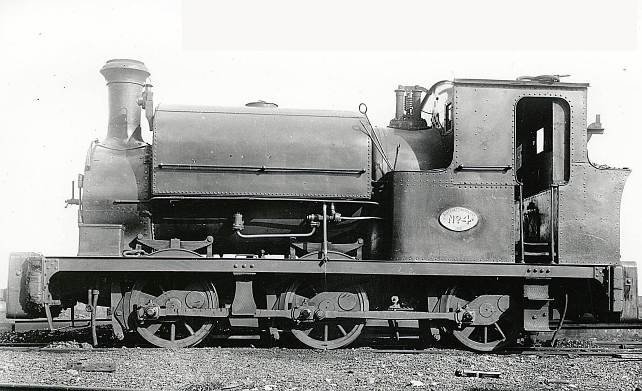
The replacement was an 0-6-0 Tank Engine built by Manning Wardle (Works No. 631), renamed the "Golden Valley", This was purchased second-hand to handle the early passenger and goods traffic sometime after the first section of the line opened from Pontrilas to Dorstone in 1881. It was the primary workhorse of the early independent company.
|
|
| A Manning Wardle 0-6-0 locomotive, Works No. 634, probably like those used on the GVR |
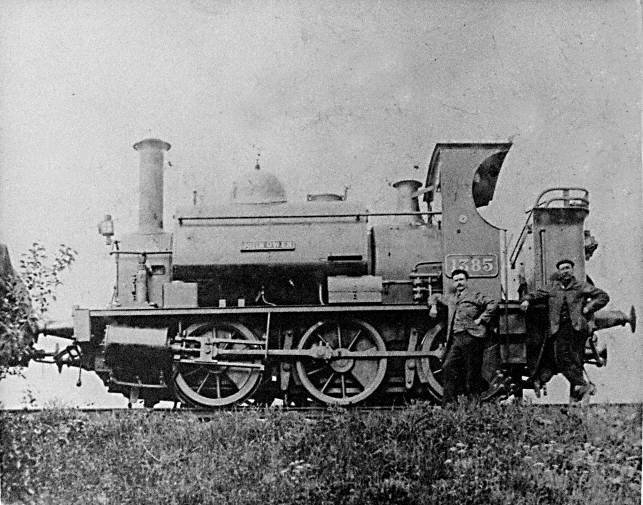
When the ambitious extension from Dorstone to Hay-on-Wye neared completion in 1889, the railway acquired two additional 0-6-0 saddle tanks from builders like Manning Wardle and Hudswell Clarke to manage the full 18-mile timetable. These were notoriously overworked and poorly maintained due to the railway's near-bankruptcy. From time to time if finances permitted the GVR Company also hired locomotives from the Great Western Railway to cover short-term needs arising from the unreliability of their own machines. One such was the “John Owen” an 0 ‑ 6 ‑ 0 saddle tank built in 1872 by Fox, Walker & Co. of Bristol. The Great Western Railway acquired it when it absorbed the Whitland & Cardigan Railway in 1886, and it is likely that it was rented out on the basis that it did not fit into the ‘standard’ GWR fleet.
|
|
| The “John Owen” on the Golden Valley line in the late 1800s. |
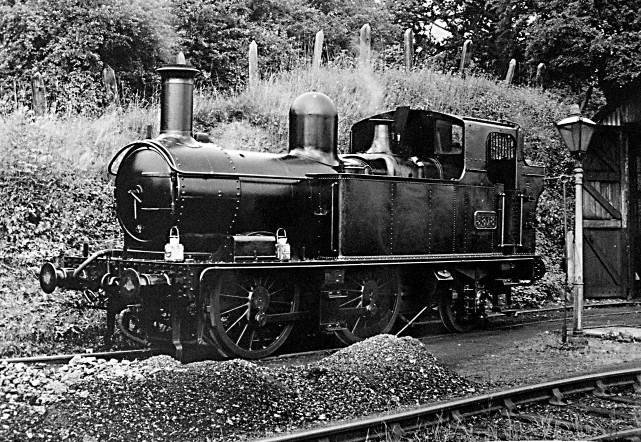
When the GWR bought the bankrupt Golden Valley line for a meagre £9,000 in 1899, they completely overhauled the track and introduced standard GWR branch line rolling stock. They were not over-generous, however; the standard power for the line's daily mixed trains running between Pontrilas and Hay was the GWR Class 517 0-4-2T, a model which had first been launched back in 1868. After 1932 an updated version of this locomotive [the 1400 class] was gradually introduced across the GWR, of very similar appearance but with a number of technical innovations and improvements.
|
|
| GWR Class 517 [Class 1400?] locomotive at the Pontrilas engine shed on the Golden Valley Branch |
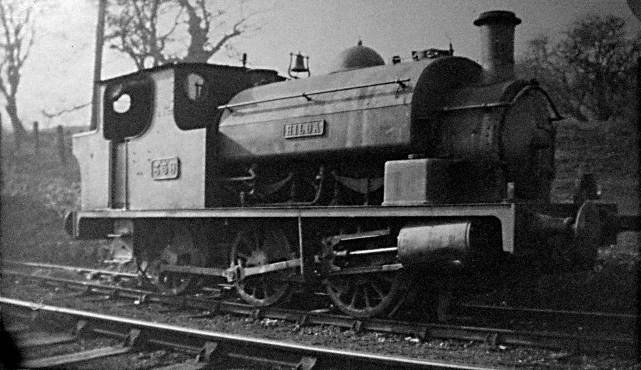
A fascinating late-era visitor was locomotive No. 359 "Hilda". This Hudswell Clarke 0-6-0 tank engine (originally built for the Llanelly and Mynydd Mawr Railway) was stationed out of the Pontrilas Shed to help haul heavy munitions and construction trains in the nearby Elm Bridge Ordnance Depot during World War II. Larger main-line GWR engines probably also featured on the Elm Bridge route for heavier military trains hauled from the Rotherwas Royal Ordnance Factory in Hereford.
|
|
| Locomotive 359 “Hilda” at Elm Bridge Ordnance Depot |
The Carriages
When the line opened from Pontrilas to Dorstone in September 1881, the company boasted a fleet of three distinctive passenger carriages, probably acquired second-hand and refurbished. Built by the Oldbury Railway Carriage & Wagon Company, who in the 1870s to 1880s specialised in producing relatively cheap rolling stock for small rural lines, these were striking, non-standard vehicles with timber bodies and no corridors, featuring open-end platforms with hand rails (balconies).
|
|
| The original GVR carriages on display at Dorstone – opening day 1881 |
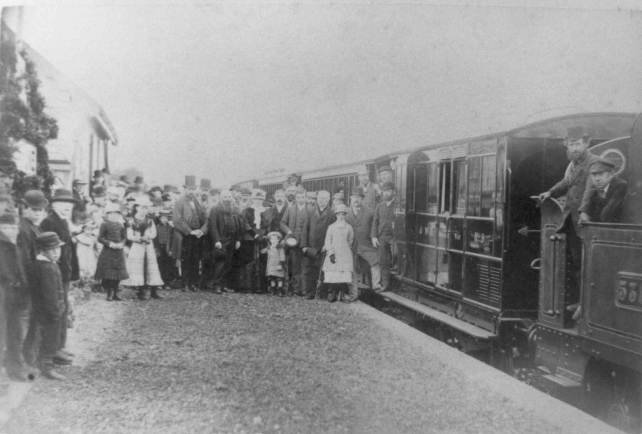
The GVR fleet consisted of two 6-wheeled coaches (with balconies at both ends) and one 4-wheeled brake coach (with a single balcony). They were reputedly beautifully turned out in a livery of dark green picked out with gold, perhaps as a hopeful statement of style over substance.
|
|
| How the GVR Company carriages may have looked in company livery at Dorstone in 1881 [colours generated by AI from the original photograph] |
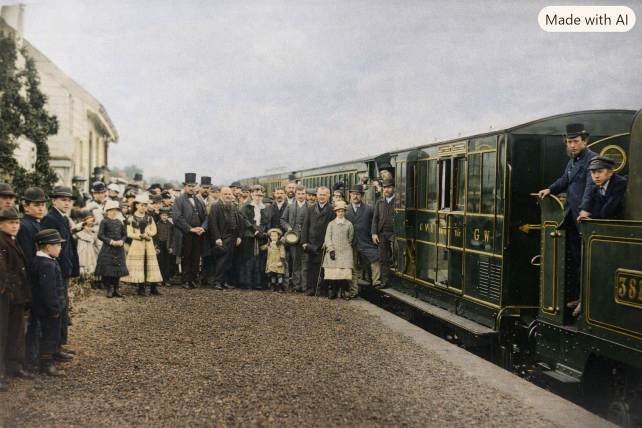
The six-wheelers likely had three or four compartments for different classes of travel, lit by oil lamps and with roof vents for ventilation. The four-wheel carriage likely served as a brake coach with a guard’s compartment and luggage space, These carriages are probably those featured in the photograph of Peterchurch station, above, and became something of a scandal at the time because the Golden Valley Railway bought them on credit but never actually paid for them.
By November 1882, Oldbury was suing the railway for payment. Desperate, the railway directors tried to offer "debentures" (glorified IOUs) or sell the carriages back to Oldbury while keeping them on the line. Oldbury ultimately lost patience and repossessed them. In 1885, they shipped the coaches off to the Isle of Wight Railway, where they spent the rest of their working lives running on the Bembridge branch line.
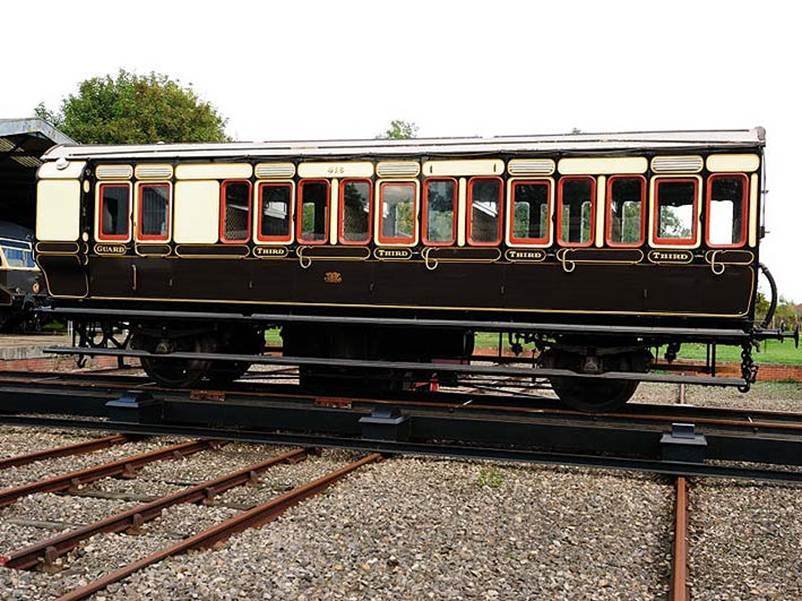
Left with no carriages of its own, the Golden Valley was forced to borrow or rent standard, outdated 4-wheeled coaches from the Great Western Railway (GWR) just to keep a basic timetable running.
|
|
| A GWR four-wheel carriage of c. 1885 at the Didcot Railway Centre |
The Wagons
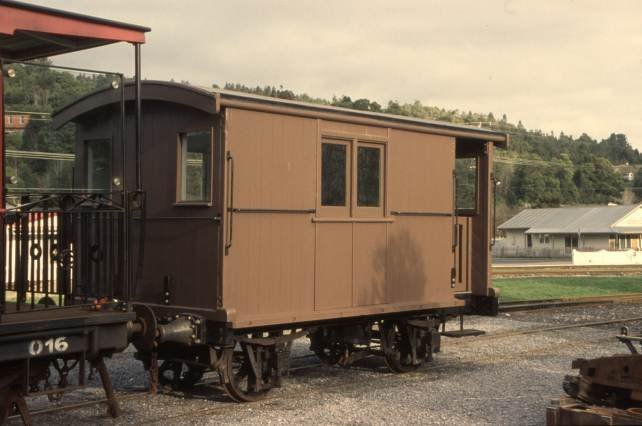
Remarkably, the Golden Valley Railway never owned any goods rolling stock during its independent existence, with one lone exception. The only piece of freight stock the company officially owned was a single goods brake van used to control the trains.
|
|
| An early Goods Brake Van [image by AI] |
To handle the valley's agricultural goods, timber, and red marl brick traffic, the railway relied entirely on a "mixed train" system. The line would request standard GWR or Midland Railway wagons, drop them at local sidings (like Abbey Dore or Peterchurch) for farmers and merchants to load, and then hook them up to the daily passenger trains.
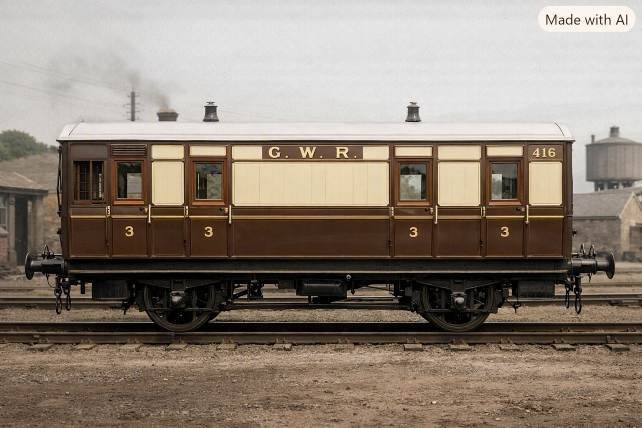
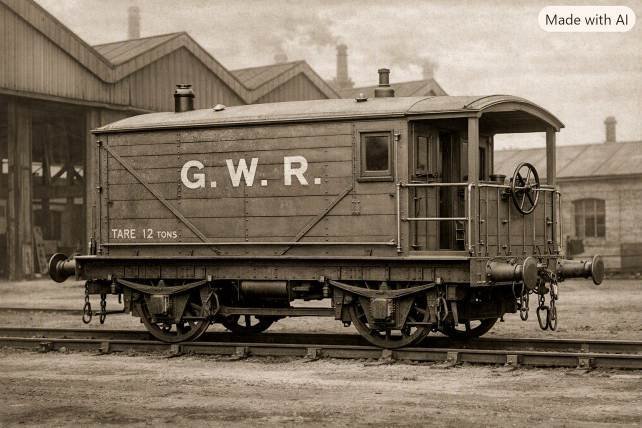
When the GWR fully absorbed the line in 1899, this patchwork mixed train operation with borrowed or rented wagons and carriages ended. The GWR equipped the valley with standard Great Western rolling stock, including their iconic four-wheeled coaches and brake vans.
|
|
| Standard branch line passenger coach in GWR livery c.1900 [image from AI] |
|
|
| GWR TOAD Brake Van c.1900 [image from AI] |
The Infrastructure
The independent Golden Valley Railway had no budget for brick or stone masonry, which gave its line a highly distinct, rustic aesthetic. While the junction stations at the ends of the line - Pontrilas (GWR) and Hay-on-Wye (Midland Railway) - were standard stone structures, all but one of the intermediate valley stations were entirely custom, lightweight wooden affairs, earning the line a reputation as a standard-gauge line with the "charm of a narrow-gauge light railway". The rest of the line was similarly constructed down to a budget, with light rail sections, minimal ballast, and mainly timber bridges and culverts, coupled with sharp curves and steep gradients to minimise civil engineering expenditure.
1. The Wooden Stations (The Intermediate Stops)
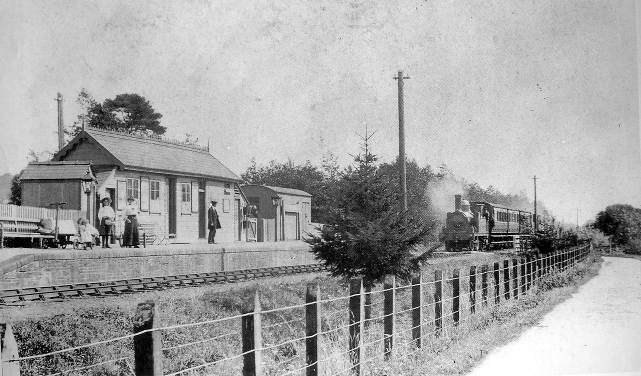
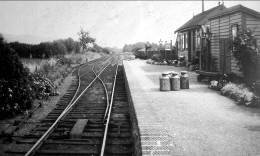
At intermediate stops like Peterchurch, Vowchurch, and Abbey Dore, the structures were entirely timber-built. These stations featured simple, single-story timber framing clad in weatherboard or shiplap. They typically housed a small booking office, a modest waiting room for passengers, and a tiny alcove for a ticket window. Unlike mainline masonry platforms, the platforms here were low, earthen ramps retained by heavy timber sleepers or standard wooden piling.
[Editor’s Note: Surviving photographs of the stations, including that of Peterchurch below, appear to show the platforms with well-constructed masonry trackside facings, with the exception of the halts at Bacton and Greens Siding. It is possible, though perhaps unlikely, that the platforms were upgraded when the GWR refurbished the line after its takeover in 1899. ]
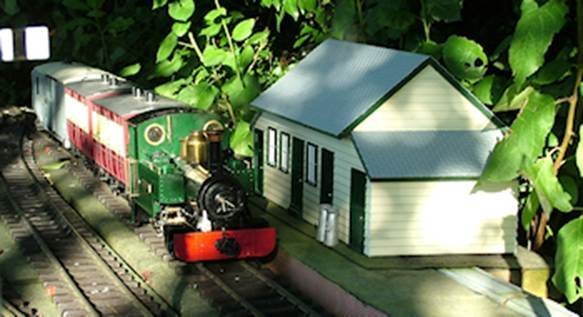
Passengers climbed directly from the sloped trackside ramps onto the platform level. These quaint structures became a favourite inspiration for model railway enthusiasts (even spawning dedicated commercial model kits replicating the Peterchurch/ Vowchurch timber layout).
|
|
| Peterchurch station c. 1900 |
|
|
| The model station produced by ‘Jackson’s Miniatures’ based on the GVR |
Because they were built of simple timber, almost nothing remains at these sites today, though Westbrook Station remarkably survived into the mid-20th century as a decaying time capsule before its structure collapsed.
2. The Stone Outlier: Clifford Station
Near the Hay-on-Wye end of the line, Clifford Station broke the mould. Unlike its timber sisters down the valley, the Clifford structure was constructed entirely of stone featuring beautifully cut quoin stones and lintels. As the only intermediate station built of stone, Clifford Station resisted decay far better than its wooden counterparts. It closed to passenger traffic in December 1941 and shut down entirely in 1950, but because it was built to a much more rugged specification, it famously survived for decades after the line's closure to passengers in 1941, standing untouched with its ticket window intact well into the 1980s before eventually being dismantled.
|
|
| Clifford Station and water tower in the 1930s |
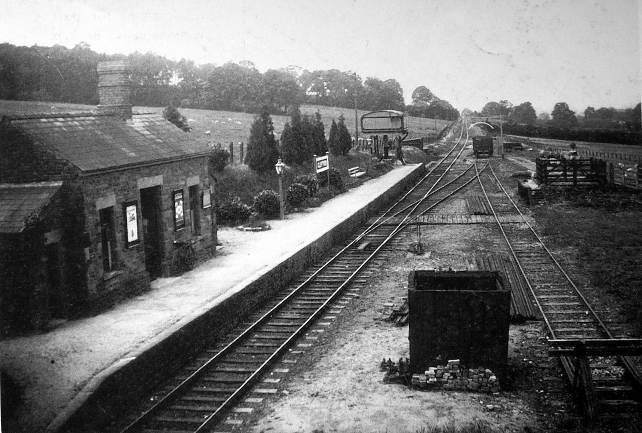
While the tracks were systematically lifted by contractors by the mid-1950s, the stone building and its distinct railway water tower stood as abandoned, overgrown landmarks for decades. When the site was finally cleared and dismantled, its structures were not simply demolished for scrap, but were saved by preservationists. Both the stone station building and the vintage water tank tower were carefully dismantled and purchased by heritage railway enthusiasts. The components were transported away from Herefordshire to find new lives on active UK heritage lines, ensuring that Clifford's unique architecture survived even though its original trackbed has completely returned to nature.
The dismantling and preservation of Clifford Station's stone structures is one of the most interesting salvage stories of the line. The stone building was meticulously dismantled block by block, with the stonework systematically numbered and catalogued to allow for exact reassembly. It was acquired by preservationists and transported to Winchcombe railway station on the Gloucestershire Warwickshire Steam Railway (GWSR), which had completely lost its original buildings after British Railways demolished them in the 1960s. When the heritage railway volunteers set out to rebuild the station to its former glory, they utilized salvaged materials from historic, closed lines. The finely cut stone components saved from Clifford provided the perfect period-accurate materials to reconstruct a traditional Great Western Railway-style country station footprint.
The cast-iron water tank and stone tower structure that once supplied the Golden Valley's thirsty steam engines was also salvaged. While local records are slightly more fragmented on its exact tracking, it was dismantled prior to the station building clearance and is widely recorded by regional railway historians as having been relocated to Monmouth Troy or used to supplement infrastructure on the expanding South Wales heritage networks.
3. The "Tin Tabernacle" Legacy
A quirky detail of the Golden Valley infrastructure is that it heavily utilized cheap, corrugated iron building methods common to the late Victorian era. This unique architectural footprint is mirrored by the modern Golden Valley Light Railway (GVLR) heritage line in Derbyshire, which pays tribute to the original line's visual style by transporting visitors past a preserved iron "Tin Tabernacle" style church structure.
[Editor’s Note: This characterisation of the Herefordshire Golden Valley Railway has not been encountered elsewhere in the historical narrative, nor does it appear to be supported by contemporary photographs of the stations, where the roofs look to be tiled and the only use of corrugated iron appears to be in roofing adjacent storage/ linemen’s sheds ]
4. The Track
When the Great Western Railway (GWR) formally purchased the bankrupt Golden Valley line in 1899, they spent over £15,000 completely re-laying and re-conditioning the neglected track before reopening it in May 1901.
The track layout at the original wooden stations was remarkably basic, mirroring the railway’s shoestring budget. At nearly all the intermediate stops the stations were built with simple single-ended sidings rather than full passing loops. A mixed train arriving at the station would unhook wagons and shunt them into the yard to be loaded with agricultural produce, timber, or red marl brick by local workers. Because there was no loop to allow the locomotive to run around its train, the logistics required careful planning by the crew.
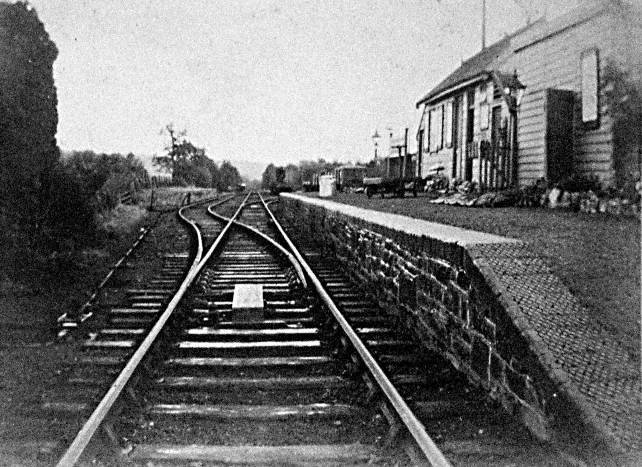
Dorstone Station was the exception. It was the primary operational hub of the valley, and featured a proper passing loop and a second platform. This was added specifically after 1889 to accommodate two-way train working when the extension further up the valley to Hay-on-Wye opened.
|
|
| The Dorstone loop and ‘down’ platform |
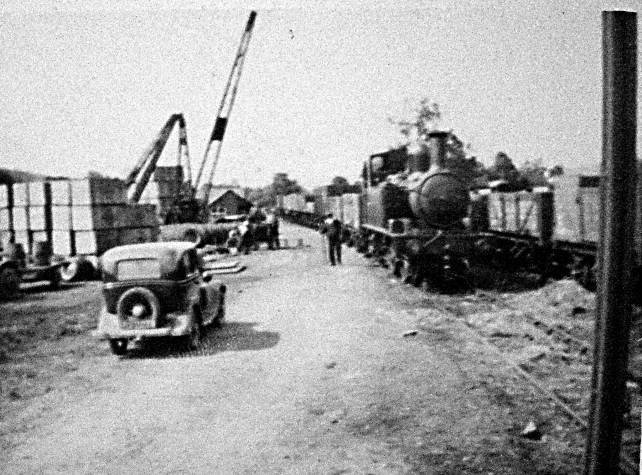
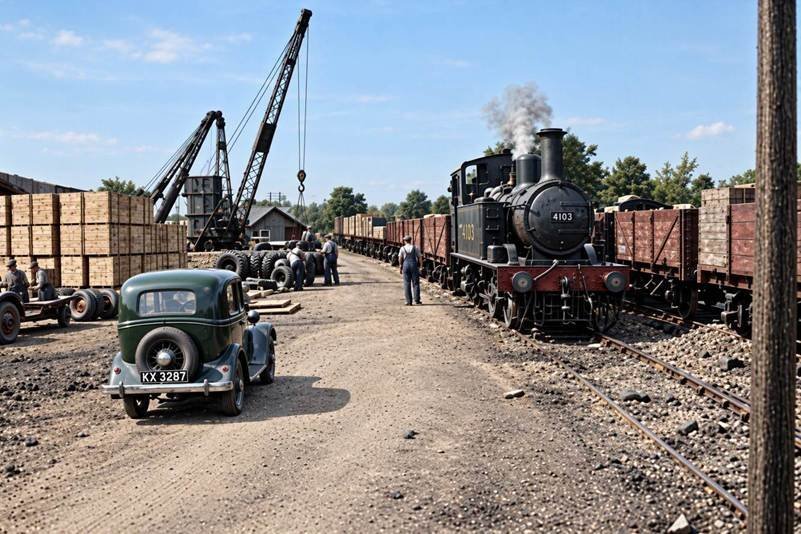
However, the tracks tell an interesting story of how operations evolved from standard village sidings into a heavy wartime infrastructure. The coming of war in 1939 led to some radical changes. Most of the line beyond Bacton was effectively shut down and mothballed for the duration shortly after commencement of hostilities. Meanwhile, the quiet agricultural yards at Bacton & Pontrilas changed drastically. This was largely due to the construction of the Elm Bridge Munitions Depot near Pontrilas, supplied by rail from the Royal Ordnance Factory at Rotherwas in Hereford, but was also linked to the somewhat eccentric decision to create a tractor assembly operation at Bacton using American Allis Chalmers tractor parts transported by rail from convoys arriving at South Wales ports.
The Great Western Railway expanded Bacton Station with completely new sidings and a significantly enlarged goods yard to handle the tractor assembly, and reputedly the nearby Abbey Dore workhouse buildings were also utilised in support of the endeavour.
|
|
| The tractor Assembly site at Bacton rail yard c. 1943 |
|
|
| The wartime tractor Assembly site at Bacton rail yard reimagined in colour by AI |
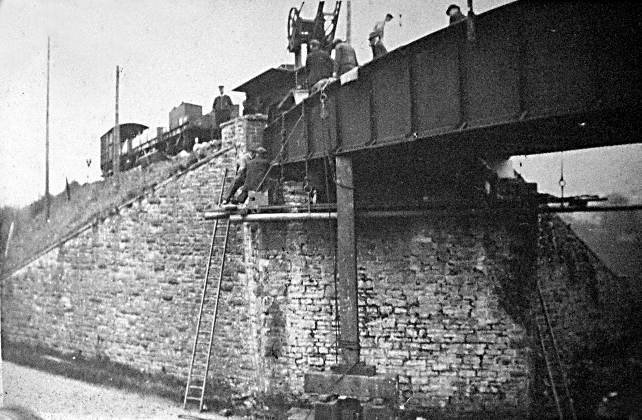
Expanded loops and sidings were also laid at Pontrilas and a secure military spur line was built beyond Abbeydore station to connect the branch directly to the newly constructed sprawling ammunition depot rail network. The physical engineering works undertaken to upgrade the track for wartime ammunition traffic was also extensive. The Golden Valley Railway was cheaply built in the 1880s, with light rail section, minimal ballast, timber bridges and culverts, sharp curves and steep gradients. When the Ministry of Defence created the Elm Bridge Munitions Depot (a major WWII ammunition sub ‑ depot), the GWR needed to run much heavier locomotives, longer trains, and high ‑ weight wagons carrying shells, bombs, and small ‑ arms ammunition. This required substantial strengthening of culverts embankments, track foundations, ballast and bridges between Pontrilas and Abbeydore up as far as the Elm Bridge spur, in addition to the extended sidings and loops at Pontrilas and Elm Bridge.
|
|
| Reinforcing one of the Golden Valley Branch bridges near Pontrilas c. 1941 |
5. The Signals
The Golden Valley Railway (Pontrilas–Hay) used an extremely simple, low ‑ cost signalling system throughout its life. The reason was straightforward; the GVR was one of the most financially disastrous railways in Britain. It could barely afford locomotives, let alone signal boxes. Apart from a chronic lack of money, it had low traffic volumes; there were rarely more than three trains a day with one extra on market days. A so-called ‘staff ‑ and ‑ ticket’ system was seen as safe, cheap, and adequate.
During the independent GVR era (1881– 1898) it therefore had no fixed signals at all, relying entirely on staff ‑ and ‑ ticket working and trainmen’ s hand signals. After the GWR takeover (1901–1957), only minimal upgrades were added: a ground frame at Pontrilas, basic point locks, and later wartime flag/hand signalling for Elm Bridge munitions traffic. No colour ‑ light signals, no semaphores at intermediate stations, and no signal boxes ever existed on the branch, although the GWR box at Pontrilas and the Midland box at Hay controlled the access to the branch line at each junction.
The GVR used the standard Great Western ‘Staff and Ticket’ practice for cheap single lines involving one train staff for each section (Pontrilas–Abbey Dore, Abbey Dore–Vowchurch, etc.), and a ticket issued only when a second train needed to follow the first. The staff itself acted as the authority to enter the section. There is no evidence of telegraph block instruments, block bells, or any form of controlled signalling, and the stations had no fixed signals. Drivers and guards used flags, lamps, whistles, and hand signals for shunting. This was typical of very small rural lines in the 1880s.
When the GWR bought the failed GVR in 1899 and reopened it in 1901, they did not install full signalling. The branch remained single line staff ‑ and ‑ ticket, with no signal boxes, and no semaphores except at Pontrilas Junction (on the main line). The only ‘proper’ signalling affecting the GVR was at Pontrilas, controlled from the main ‑ line GWR signal box.
The GV branch connection was operated by a ground frame released by the Pontrilas signalman.
|
|
| GWR Specification for GV Branch signals and working |
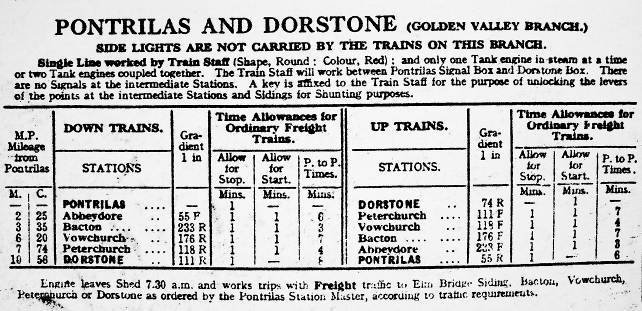
Signalling for Elm Bridge Munitions Depot (1940– 1945) remained minimal despite the introduction of heavy ammunition trains with all the associated hazards during WWII. There is evidence of flagmen at Elm Bridge Crossing, pilotmen accompanying heavy trains, and hand signalling for movements into the depot. Inside the Elm Bridge Ordnance Depot itself movements were controlled by military personnel, using hand signals, and ground frames for points. No semaphores or colour ‑ light signals were installed.
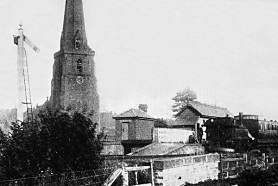
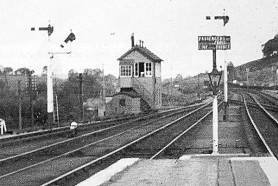
| Editor’s Note: The AI feedback on signalling expressed above is clear and unequivocal. However, contemporary photographic evidence suggests that the stated interpretation, at least in part, is incorrect. The photograph shown earlier of Peterchurch Station dating from about 1880 shows prominently a semaphore signal on a mast at the north end of the platform, which must have been installed by the independent railway company. It is at the dip, suggesting it is in operation and giving clearance to the train at the platform to proceed. The attached ladder also strongly suggests that the item that can be seen fixed to the top of the mast at the rear of the semaphore arm was a light, most likely an oil lamp that was lit and refilled by climbing up to it as needed. There is however no evidence of a separate signal box so signal and points were presumably worked by the station staff. No other contemporary photographs are known to exist, and there is no sure way to tell whether this early arrangement was common to all the stations on the line or unique to Peterchurch, although numerous photographs of other stations dating from the early 1900s onwards show no evidence of signal gantries [except at Pontrilas, below]. Nor is there surviving evidence of exactly how the Peterchurch signal was operated or how long it might have stayed in use. As for the GWR years, photographs of the Golden Valley Branch at Pontrilas station in the 1920s and 30s show semaphore signals controlling access to the line, and by the end of the war several semaphore signal gantries had been installed adjacent to the signal box, one of which seems very likely to control the Golden Valley platform and line. Here we are also dealing with signals affecting the main line and all of them seem to be equipped with lights. | |
|
|
|
| Peterchurch station c, 1880 | Pontrilas GV Branch platform c. 1947 |
Operations
As described earlier, the independent Golden Valley Railway relied entirely on a "mixed train" system for its operations, using GWR or Midland Railway wagons dropped at local sidings and then hooked up to the daily passenger trains. Coupled with the vagaries of locomotive reliability and other factors – sometimes even including a lack of ready cash to purchase coal to fire the engine at all – this ‘ad hoc’ approach earned the line an unfortunate reputation for disorganisation and unreliability, immortalised in a joke postcard of the era which dubbed the service ironically “The Flyer”
|
|
| Popular perception of the Golden Valley Railway c. 1900 |
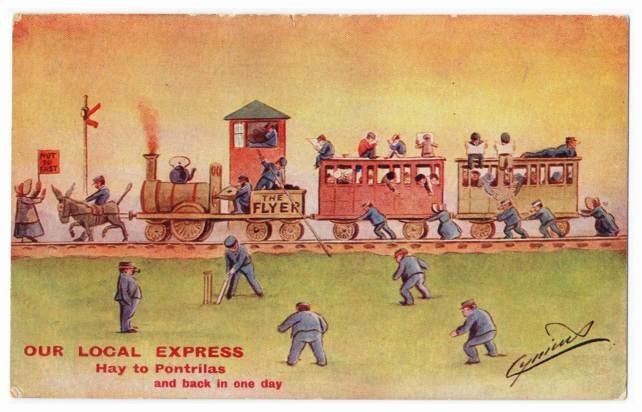
- Fares
It seems likely that the early Company’s bookkeeping, ticketing and administration were as chaotic as the rest of its operations, and the only reliable record of how things were supposed to work at that time is found in the Parliamentary Acts that established the enterprise. They spelled out in great detail the charges that the Company was permitted to levy for passengers and freight.
|
|
| The Golden Valley Railway Act: The first of several pages detailing what the Railway Company could charge for any type or combination of goods, services and passengers |
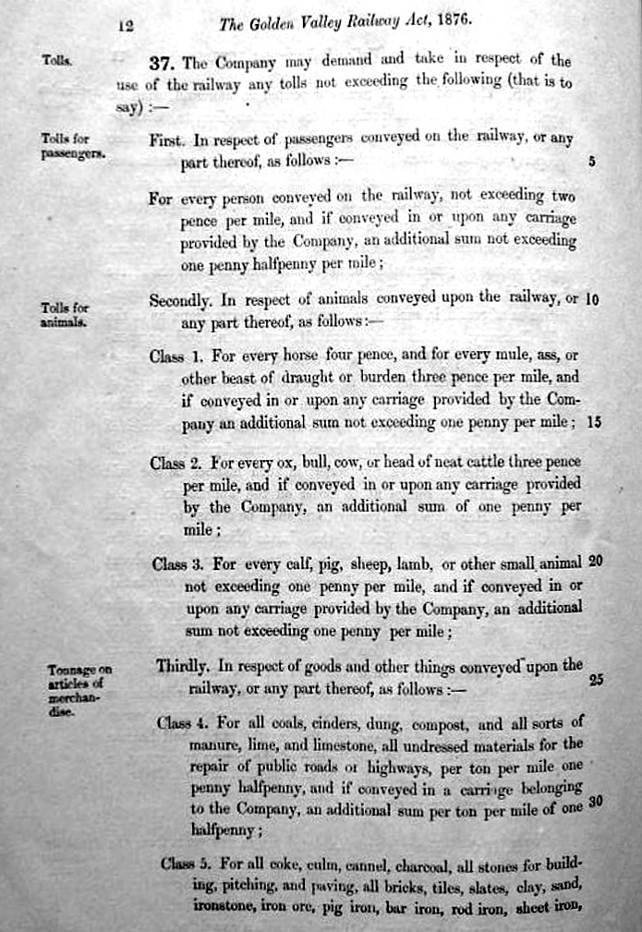
The GWR would have been bound by these tariffs after they acquired the line, but they were superseded over time and following the grouping of British railways in 1923, passenger fares were legally standardized across the country based strictly on mileage. The baseline 3rd Class fare was fixed at 1½ pence (1½d) per mile. For a short hop down the valley - such as a 2-mile trip from Pontrilas to Abbey Dore - a 3rd Class single ticket would therefore cost roughly 3 pence. Traveling the entire 18-mile length of the line from Pontrilas to Hay-on-Wye cost a passenger approximately 2 shillings and 3 pence (2s 3d). [Editor’s note: This was a time when the national average wage for agricultural labourers was 28 shillings a week, making rail travel an unaffordable luxury for most local people in the Golden Valley, which was one of the reasons for the line’s continuing financial problems.]
One odd exception was a legal carryover that survived on the line called the "Parliamentary" ticket. Originating from 19th-century railway legislation, the British government mandated that every railway line must run at least one train per day that provided affordable transport for working-class citizens, priced at no more than 1 penny per mile. Even into the 20th century, certain early morning mixed trains on the Golden Valley line officially issued tickets explicitly stamped "Third Class Parliamentary" or "Parl.", ensuring local labourers could commute into Hereford or Hay at the cheapest legal rate.
As automobile and rural bus competition intensified during the 1930s, the GWR introduced a variety of promotional fares to fill the coaches of the valley's mixed trains. Market Day Returns were issued on Wednesdays and Thursdays; these special discounted return tickets were issued for passengers travelling to the livestock markets at Dorstone, Hereford or Hay-on-Wye. These tickets were often priced at "single fare for the return journey," effectively offering a 50% discount. Shopping and Evening return fares were also marketed to encourage valley residents to take the train into Pontrilas and catch main-line connections up to the shops and cinemas in the city of Hereford.
2. Working the line
After the purchase of the line in 1899, the GWR integrated the valley into its standardized mixed-traffic system. Because the agricultural valley generated modest traffic, running separate passenger and freight trains was highly uneconomical. Instead, the GWR combined them into singular, highly orchestrated "mixed trains" that served as the lifeline of the Herefordshire countryside. On the surface, this was similar to the old operational approach – but the reality was the difference between amateurs and professionals. Mixed-traffic operations on the branch now worked through specific rules, rolling stock, and shunting practices, and the GWR strictly standardized the composition of its mixed trains for safety and efficiency.
The old, breakdown-prone engines were also scrapped. The GWR introduced the elderly but reliable small class 517 tank engines and had the relative luxury of being able to substitute other locomotives as and when the allocated machines were scheduled for repairs or regular maintenance at their Pontypool depot. Standard GWR 5-plank or 7-plank open wagons carried Herefordshire timber and agricultural produce, and "Mink" covered vans carried seasonal fruit, livestock feed, or local red marl bricks and other materials.
|
|
|
| GWR ‘Mink’ covered van | GWR 5-plank open wagon |
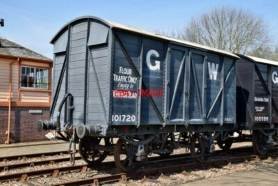
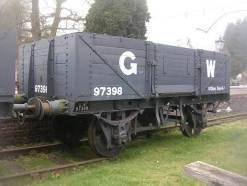
Goods wagons were always placed directly behind the locomotive to enable the complicated manoeuvres required to drop off and pick up wagons at each station. This also isolated the passenger stock to a certain extent from the jarring shunting impacts of the locomotive.
For the passengers, the GWR deployed sturdy, gas-lit four-wheeled or six-wheeled branch line coaches to replace the repossessed "balcony coaches". Every train concluded with an iconic GWR "Toad" brake van containing the train guard.
The logistics of trackside shunting were complex, and the defining characteristic of a GWR mixed train on the Golden Valley line was its incredibly slow, stop-and-start schedule. A journey that should have taken 40 minutes often took hours because of how intermediate stations like Abbey Dore, Vowchurch, and Peterchurch were worked.
On arrival the mixed train would rattle into a timber station and grind to a halt at the platform. While passengers remained seated in the carriages (or stepped onto the low earthen platforms to stretch their legs), the engine would uncouple from the passenger coaches. Still attached to the front set of goods wagons, the locomotive would pull forward and back into the local single-ended siding. It would drop off empty wagons for the village merchants and hook up fully loaded wagons of grain, hay, or timber that had been prepared by local farmers. The engine would then pull out of the siding, back onto the passenger coaches, secure the couplings, and wait for the guard's whistle before moving down the valley to repeat the entire process at the next village.
Operating mixed trains in this manner presented unique physical and safety hazards that required strict GWR regulations. Peacetime GWR passenger carriages were required by law to be fitted with continuous automatic vacuum brakes so the driver could stop the train very rapidly in an emergency. However, standard British freight wagons of the era were "unfitted", having only manual handbrakes. Because the unbraked goods wagons sat between the engine and the passenger coaches, the continuous vacuum brake connection was broken. To mitigate this risk, the GWR strictly limited the speed of Golden Valley mixed trains to a leisurely 25 mph maximum, relying on the heavy iron brake van at the rear to help pin the train down on the valley's steep 1-in-66 gradients.
This leisurely paced, deeply rural mixed-traffic operation defined the Golden Valley for four decades, balancing the GWR's corporate efficiency with the unhurried rhythm of Herefordshire village life. This was also a period of managed decline as freight and passenger volumes fell away in response to competitive pressures, until war demands and the undesirability of mixing civilian traffic with munitions trains meant regular passenger operations were permanently withdrawn in 1941.
[Editor’s Note: Limited passenger and freight services did in fact resume post-war, at least on the Pontrilas to Dorstone section, albeit in a rather desultory fashion. The Dorstone to Hay section officially closed in 1949 and the remainder closed for civilian traffic in 1953, with only the link to Elm Bridge remaining open for military use.]
3. The Timetables
The early timetable for the independent Golden Valley Railway Company was more of a statement of hope than of expectation.
|
|
| Published timetable for the GVR from May 1889 |
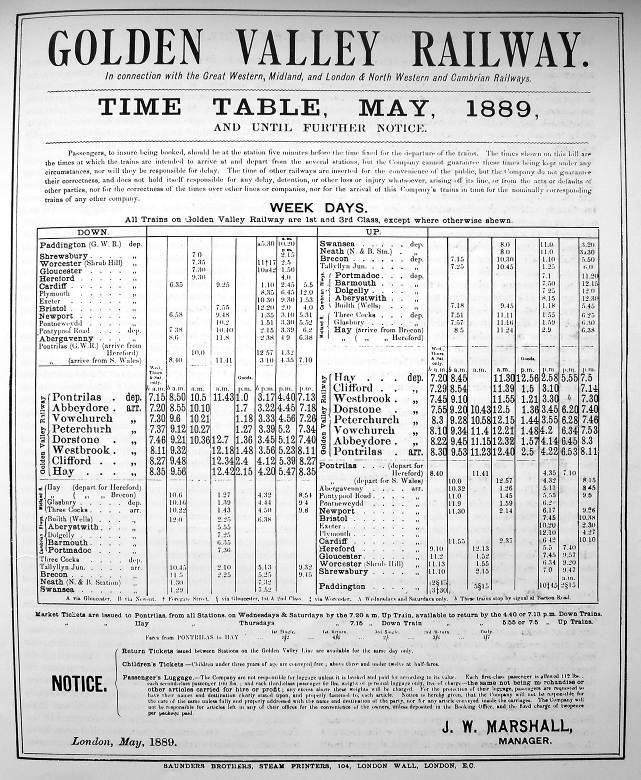
The Great Western Railway (GWR) timetables for the Golden Valley branch line during its post-takeover heyday (spanning from the line's re-conditioning in 1901 through the 1920s and 1930s) tell a different story. They reflected a relaxed, but for the first time deeply predictable rural rhythm. Because the 18-mile line strictly operated using a "one engine in steam" principle—meaning only one train was legally allowed on a given section of track at a time to prevent collisions on a route entirely lacking traditional main-line signals—the daily service schedule was constrained but perfectly optimized for the local community.
The daily timetables on the branch were structured around several key services. Throughout the 1920s and 1930s, the GWR settled on a standard service of three mixed trains daily in each direction between Pontrilas and Hay-on-Wye. The first train departed Pontrilas early (historically around 6:55 AM in the early GWR days). It was primarily designed to bring mail, daily newspapers, and external goods into the valley, while collecting local agricultural labourers and milk churns. This was followed by a late-morning/early-afternoon service that catered to travellers, school children, and general shopping traffic moving between the villages. The late afternoon/ early evening final service of the day ensured commuters and goods could return to their home villages after connections with main-line trains at Pontrilas or Hay.
This rigid timetable shifted to accommodate local agricultural commerce, which was the true economic engine of the valley. Every Wednesday, a dedicated market train originated out of Dorstone (the operational midpoint of the line featuring the passing loop). This allowed farmers from the upper valley to transport livestock and produce down to Hereford market via the main line junction at Pontrilas. The Hay-on-Wye market was accommodated too, with additional timing allowances woven into the Thursday timetables to let residents access the bustling market town of Hay. On these days, the time spent shunting at intermediate sidings was cut back so the locomotive could cope with the higher volume of passengers.
If you read a GWR public timetable from the 1930s, the journey times between Pontrilas and Hay look extraordinarily slow by modern standards. The leisurely transit of the 18-mile branch usually allowed anywhere from 75 to 90 minutes. This was because the public timetable hiddenly accounted for the "lineside shunting" described earlier. While a train might only take 3 minutes to travel between, say, Vowchurch and Peterchurch, the timetable built in a 10-to-15-minute buffer at each platform. This gave the crew ample time to uncouple the engine, move goods wagons into the sidings, reconnect to the passenger coaches, and pump the vacuum brakes back up to pressure before departure.
True to Welsh and border-country traditions of the era, the Golden Valley branch line observed a strict "No Sunday Service" rule. The line completely closed on Saturday night after the arrival of the final mixed train, leaving the valley in total silence until the early morning locomotive fire was lit on Monday morning. This gentle pacing remained unaltered until the onset of World War II, when emergency military demands and the decline of rural passenger numbers forced the GWR to permanently cancel all public passenger timetables on the line on December 15, 1941.
4. Ticketing
There is no record of how ticketing worked in the early independent days, but during the 1920s and 1930s, the Great Western Railway (GWR) brought its highly organized, nationwide ticketing system to the Golden Valley branch line. Passenger ticketing on the line reflected standard UK statutory rail practices of the interwar era, heavily emphasizing affordability to compete with emerging local bus services. Passengers buying a fare at one of the valley's wooden stations (like Abbey Dore or Peterchurch) were issued classic Edmondson cardboard tickets. These were small, stiff cardboard cards measuring roughly 2¼ by 13 /16 inches. Each ticket was individually stamped with a unique serial number using a mechanical dating press at the booking window. The GWR color-coded tickets by class. While 1st Class tickets were traditionally white or yellow, the vast majority of Golden Valley passengers travelled 3rd Class, which utilized distinct buff or green cardboard tickets.
|
|
| One of the last tickets issued on the Golden Valley line, for an excursion special August 1951 |
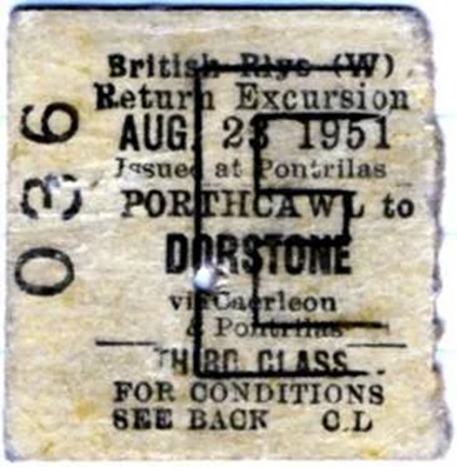
Unlike passengers, who simply bought a ticket at a window, on the Great Western Railway (GWR), billing and ticketing livestock or agricultural goods was a highly systematized, bureaucratic process. Farmers and merchants in the Golden Valley had to legally consign their cargo through a rigorous paper trail managed by the local station master.
The process relied on a combination of specific railway forms, telegraphic codes, and weight-based tariffs. Before any animal, sack of grain, or timber log could touch a GWR wagon, the farmer had to fill out a Consignment Note which acted as a legal contract between the farmer and the GWR. It required the sender to declare the exact nature of the goods, the sender's and receiver's names, the destination station, and whether the shipping charges were "Paid" (by the sender) or "To Pay" (by the recipient upon delivery). For livestock, farmers could choose between the "Company’s Risk" rate or a cheaper "Owner's Risk" rate. Opting for Owner's Risk meant the GWR wasn't financially liable if an animal was injured or panicking during transit, provided the railway wasn't guilty of wilful negligence.
The GWR did not ticket livestock per animal; they billed based on wagon size. They also used Telegraphic Codes to identify the types of wagon used. A standard GWR cattle truck was coded as a "Mex", while a specialized horse box was a "Box". The Rate system used when a Golden Valley farmer brought sheep, pigs, or cattle to the cattle docks at Dorstone or Peterchurch involved the station master measuring out the stock into small, medium, or large wagon loads. A flat mileage-based rate was charged for the entire wagon, regardless of whether the farmer packed 10 cows or 15 cows inside.
Once the freight was loaded and billed, the station master created a Waybill.
One copy stayed at the originating station, one copy went into the guard's ledger in the rear "Toad" brake van, and a physical Wagon Label was slotted into a metal frame on the outside of the specific goods van. This label was clearly visible to yard shunters. For livestock, it frequently featured distinct, bright color-coding (such as a red stripe or an "Attested Livestock" stamp) to alert train crews that the wagon contained live animals that legally required feeding and watering if a delay occurred on the line.
For non-living farm traffic—like locally harvested timber, hay bales, or red marl bricks—billing was governed by a massive industry book called the General Classification of Goods by Merchandise. This book split all conceivable trade goods into classes (numbered 1 to 21). Raw, heavy goods like timber or manure sat in the lowest, cheapest classes and were billed per ton. Refined goods or delicate seasonal soft fruits sat in the higher classes, requiring a premium rate because they occupied valuable space in "Mink" covered goods vans. Every intermediate station in the valley featured a heavy mechanical cart-weighbridge in the goods yard. A farmer would roll their horse-drawn cart (and later, tractor) onto the scale fully loaded, dump their sacks into a waiting GWR 5-plank open wagon, and then weigh the empty cart on the way out to calculate the exact tonnage billed on their consignment note.
The transportation of fresh milk from the rolling pastures of Herefordshire to major urban centres (like Birmingham or London Paddington) was one of the most profitable yet time-sensitive operations on the Great Western Railway. Because milk could spoil rapidly, the GWR treated it with a unique administrative hybrid status: it was billed as freight but transported at passenger-train speeds, utilizing highly specific ticketing and accounting procedures.
On the morning mixed trains of the Golden Valley branch, this traffic was managed through a highly coordinated system known as the Twin-Label Accounting System. The GWR did not weigh individual milk churns on station platform scales because it took too much time. Instead, accounting relied entirely on a standardized paper trail attached straight to the containers. Every conical 17-gallon (and later, 10-gallon) galvanized iron milk churn was permanently fitted with a stamped brass plate near the rim. This plate explicitly identified the owning farm or creamery, ensuring the empty churns could legally be routed back to the correct Herefordshire farms after delivery. When a farm hand dropped off a full churn at a timber platform like Peterchurch or Vowchurch, a thick white paper label was tied directly to the lid or side handle. The farmer wrote the exact gallonage on this label. The GWR booking clerk used this declared volume to instantly bill the cargo without delaying the train.
|
|
|
| Milk Churns waiting collection at Dorstone station | An example of a churn label, showing the owner and station for return |
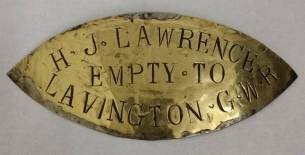
Unlike standard farm goods, which were billed strictly by the ton, or livestock, which were billed by the wagon-load, milk was billed by the imperial gallon. The GWR maintained a strict zone tariff book for milk. A short branch-line hop to a regional depot cost a fraction of a penny per gallon, while a long-distance transit to London cost roughly 1d to 2d per gallon in the interwar years. To prevent farms from sending tiny, economically non-viable quantities on the morning mixed trains, the GWR enforced a strict 12-gallon minimum charge per consignment. If a farmer sent a half-empty churn holding only 6 gallons, they were still legally billed for 12.
A major challenge for farmers was the cost of getting their heavy metal containers back. To incentivize dairy traffic, the GWR offered a crucial financial concession; returned empties travelled completely free of charge or for a negligible fraction of a penny. Once a London dairy emptied the Herefordshire churns, the GWR loaded the empty containers into ventilated, slat-sided "Siphon" vans or passenger luggage compartments and shipped them straight back down the Golden Valley line, matching the serial numbers on the brass plates.
Because the Golden Valley operated on tight mixed-train timetables, the loading process was an exercise in rapid cooperation. The train guard or local station porter acted as the rolling clerk. As the heavy churns (weighing up to 250 lbs when full) were tilted and rolled across the earthen platforms into the train, the clerk cross-referenced the paper labels against a specialized Milk Waybill Ledger. Rather than demanding cash upfront on the platform, the GWR typically ran monthly credit accounts for established Herefordshire agricultural cooperatives, settling the total gallonage fees directly with the creameries at the end of every four weeks.
The creation of the Milk Marketing Board (MMB) in October 1933 fundamentally restructured the British dairy industry. By introducing statutory power, centralized logistics, and standardized pricing, the MMB single-handedly catalysed the end of the traditional railway milk churn, shifting mass milk transport over to bulk glass-lined rail tankers and road vehicles.
The MMB triggered this transition through a series of sweeping operational overhauls involving the centralization of Dairy Creameries. Before 1933, thousands of independent smallholders individualistically carted their own churns to local stations like Peterchurch or Vowchurch. The MMB changed the rules by introducing farm zoning. Instead of dealing with individual farmers, the MMB organized regional collection points and funded the construction of massive, centralized, rail-connected creameries (such as the nearby major depots across the border in Wales and the West Country). Thus individual farm milk was no longer sent straight to London in its own churn. Instead, local trucks collected the milk from farms and took it to these central processing plants, where millions of gallons were mixed together in giant holding vats.
Once milk was consolidated into massive quantities at centralized creameries, handling individual 10- or 17-gallon cardboard-ticketed churns became an operational nightmare. To cope with the MMB’s massive bulk output, the GWR and other railways rapidly standardized the 6-wheeled bulk milk tank wagon. Owned by the major dairy conglomerates (like United Dairies and Express Dairies) but running on railway chassis, these giant glass-lined, insulated tankers could hold up to 3,000 gallons of milk - doing the work of roughly 300 individual churns in a fraction of the loading time. Milk was pumped through hoses straight from the creamery into the train, making the labor-intensive rolling of churns obsolete.
The MMB did not ban churns overnight, but it completely changed their function. Before the MMB, the churn was a long-distance transport vessel that travelled hundreds of miles from a Herefordshire platform all the way to London Paddington. After the reorganisation, the churn was relegated to a purely local tool. Farmers still filled churns on the farm and left them on roadside "churn platforms". However, instead of being loaded onto a GWR mixed train, an MMB-contracted road lorry picked them up for a short trip to the nearest local creamery, where they were emptied into bulk storage.
For rural branch lines like the Golden Valley, this logistical shift was the final blow for platform dairy traffic. As the MMB increasingly rationalized routes, milk was diverted to larger road tankers or bigger regional railheads. The iconic sight of station porters frantically rolling heavy iron churns onto the morning passenger trains faded rapidly through the late 1930s, leaving the railway's dairy business entirely in the hands of bulk operations elsewhere until the national rail-borne milk network ceased operations entirely in 1980.
5. The Pontrilas Ammunition Storage Depot
The outbreak of the Second World War in 1939 triggered fundamental changes to the Golden Valley Railway, as previously described. By far the largest factor was the creation of the Pontrilas Ammunition Storage Depot, colloquially known as "The Dump", at Elm Bridge. This was built rapidly between 1940 and April 1941 to support the World War II effort, and remained a highly secure, active military site long after the main Golden Valley branch closed to public traffic. Internally it was served by a dedicated Military Railway that officially began just over a mile north of Pontrilas Station. The tracks branched off the main Golden Valley line close to the Elm Bridge level crossing.
Once the Depot was safely reached the trains entered the Elm Bridge Marshalling Yard, which featured a small fan of reception sidings where mainline locomotives would drop off incoming ammunition trains from the GWR network. Control of the trains was then handed over to the Royal Engineers, who operated the yard's internal distribution network independently. From the marshalling yard, the tracks split into a highly complex, sprawling web of secure tracks designed to deliver explosives safely to widely separated secure storage bunkers.
|
|
| Layout of the Military Railway and bunkers in the Pontrilas Ammunition Storage Depot |
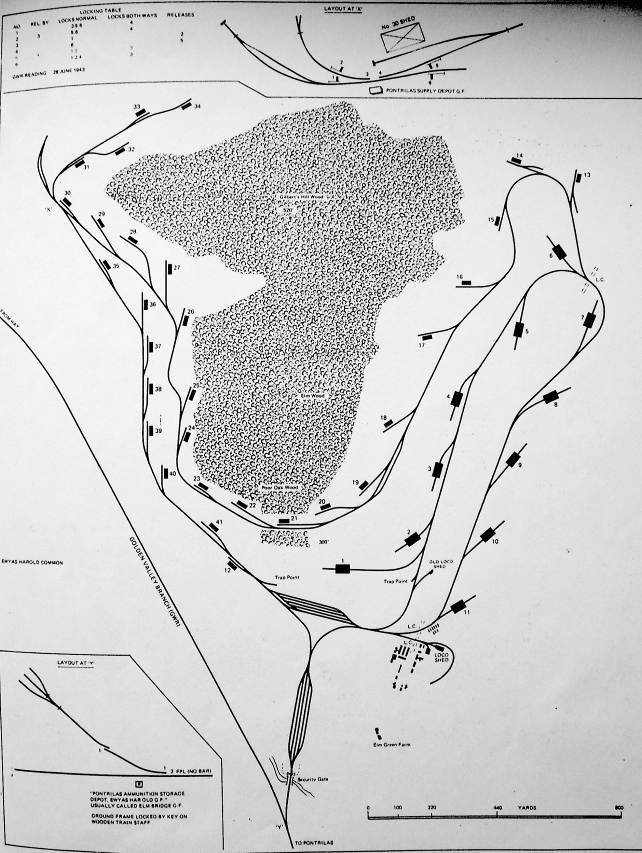
The railway cut directly into Elm Wood and Gilbert’s Hill Wood, which had been heavily cleared and redeveloped specifically to build the ordnance depot. The internal line ran deep into the woods, branching off into separate, heavily protected storage sheds, camouflaged bays, and blast-mounded ammunition magazines. The loop design allowed standard-gauge trains to navigate straight to individual storage bunkers to load or unload finished British Army munitions safely and away from public sight. While public services on the wider Golden Valley line ended in 1953, the Elm Bridge segment survived for decades. GWR and British Railways trains still ran from Pontrilas over the A465 bridge to serve "The Dump" right up until March 31, 1969, when the military base finally closed. By the end of 1970, the road bridge was demolished and the remaining tracks were lifted.
The logistics within the Elm Bridge Munitions Depot (officially an Ammunition Sub-Depot under the Ministry of Supply and later the War Department) required a strict division of labour between civilian operators and the military. Because standard GWR main-line locomotives were much too heavy and cumbersome to navigate the sharp, winding curves of a hidden sylvan weapon storage facility, the Royal Engineers (RE) Transportation and Railway Operating Companies took absolute control of motive power inside the perimeter.
Their management of the steam locomotives within the base operated under several strict protocols. GWR crews were generally prohibited from entering the high-security storage network. Instead, at the yard, the trains were broken down, and the keys were quite literally handed over to the Royal Engineers Railway Operating Group. Military crews—many of whom were conscripted peacetime railwaymen serving in specialized RE units—took over the driving, firing, and shunting duties into the woods. The Royal Engineers managed the depot's tracks using small, high-tractive-effort tank engines. They specifically utilized locomotives designed to handle tight industrial clearances and poor track conditions.
During the layout's rapid construction phase between 1940 and 1941, contractors and engineers utilized Engine No. 359 "Hilda". This was an ex-Llanelly and Mynydd Mawr Railway 0-6-0 tank engine built by Hudswell Clarke. It was perfectly proportioned for working the sharp curves of the brand-new military spurs. As the war progressed, the RE typically equipped ammunition depots with their own War Department (WD) stock, such as the ubiquitous Austerity 0-6-0 Saddle Tanks. These engines were rugged, reliable, and standardised so that military personnel could service them with basic parts.
Managing steam locomotives around thousands of tons of high explosives, breech-loading cartridges, and volatile munitions meant the Royal Engineers had to enforce rigorous safety modifications to the locomotives. Every steam engine operating within the woods was fitted with specialized wire-mesh spark arrestors over their chimneys. This prevented burning coal embers from escaping into the trees or near loading docks. Crews were strictly forbidden from dropping fires or cleaning out hot ashpans anywhere near the storage mounds or wooden loading sheds. Ashpans had to be securely sealed while the engine was traversing the depot tracks. Because of the inherent risks of open fireboxes around munitions, the Royal Engineers also heavily managed the depot yards using mechanical alternatives. They supplemented the steam engines with small, petrol-driven engine trolleys (like the Wickham trolleys stationed at the Pontrilas yard) and early diesel shunters to move lighter loads without the risk of stray sparks.
Additionally, operating steam engines on hastily laid military tracks over marshy valley ground required constant maintenance. The Royal Engineers Railway Construction Companies were tasked with continuously stabilizing the line. In 1940 and 1941, RE gangs were permanently deployed to strengthen the brick and stone culverts running beneath the tracks to ensure the heavy locomotives and ordnance wagons wouldn't cause a derailment—which, given the explosive cargo, could have been catastrophic for the entire valley.
The Pontrilas Ammunition Storage Depot at Elm Bridge functioned as a high-security Munitions Sub-Depot under the War Office and Royal Army Ordnance Corps (RAOC).
Because it was a central logistical hub rather than a manufacturing or filling factory (like the nearby ROF Rotherwas in Hereford), the trains running through the valley weren't carrying raw explosive powders or bulk chemicals like loose TNT or nitro-glycerine. Instead, the Royal Engineers handled trains loaded exclusively with finished, combat-ready ammunition.
The heavily bunkered storage bays in Elm Wood were designed to house large-calibre artillery ammunition for the British Army's field guns. Trains frequently moved High Explosive (HE) Artillery Shells, which were pre-filled and capped and ranging from the ubiquitous 25-pounder field gun ammunition up to medium and heavy artillery calibres. Separate brass or cloth propellant charges packed in secure, spark-proof transit boxes were also handled for breech-loading guns. These were paired with the shells at the forward battle lines but stored securely in separate, mounded earth magazines inside the woods.
Vast quantities of standard infantry ammunition arrived by the trainload via the Great Western Railway. The internal depot trains redistributed millions of rounds packed into rugged wooden and metal crates. This primarily included .303 British rifle and machine gun rounds, the standard ammunition for the British Army's Lee-Enfield rifles and Bren light machine guns, but substantial quantities of 9mm Parabellum rounds in heavily packed crates were also stored for Sten submachine guns and service pistols.
The depot also handled a massive volume of close-support infantry explosives. Locomotives shunted specialised ventilated vans containing 2-inch and 3-inch Mortar Bombs crated securely with their tail fins and primary ignition cartridges intact. No. 36 "Mills Bomb" Hand Grenades were shipped in crates with their detonators packed separately to ensure the trains could travel safely across the main rail networks without accidental detonation risk. As a sub-depot tasked with supplying regional units and coastal defence networks, the rail system also moved 40mm Bofors Shells [anti-aircraft ammunition packed into characteristic metal clips and transit boxes], 2-pounder and 6-pounder Anti-Tank shells, solid shot and explosive projectiles used by British armour and anti-tank regiments.
The strict compartmentalization enforced by the Royal Engineers meant that a single train would rarely carry mixed types. Entire cuts of wagons were dedicated purely to one specific class of munition, allowing the small tank engines to drop them at specifically numbered storage sheds hidden deep within the trees
Operating a high-security munitions depot like the Pontrilas Ammunition Storage Depot at Elm Bridge required specialized rolling stock to prevent catastrophic accidental explosions, backed by an iron-clad military security apparatus. Because transport regulations technically prohibited shipping explosive substances in open wagons, the Royal Engineers and the GWR utilized carefully selected, sealed rolling stock. The primary vehicles used within the depot loop were specialized, standard-gauge Gunpowder Vans.
|
|
| Gunpowder Van for transport of munitions |
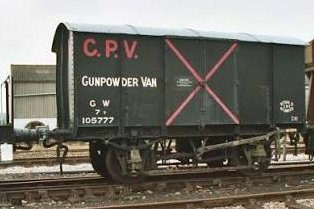
Unlike typical wooden goods vans, GPVs featured fully iron-clad bodies, completely spark-proof brass or copper locks and hinges, and non-sparking interior wooden linings. This design also completely isolated the munitions from stray embers spitting from the steam locomotives.
Due to extreme wartime shortages, the depot couldn't rely exclusively on GPVs. They heavily utilized standard 5-plank and 6-plank covered goods vans pooled from the GWR, LMS, and LNER. These were tightly sheeted with heavy, fire-resistant tarpaulins when moving smaller shell boxes and .303 small arms ammunition.
Wartime Emergency Rules applied to all traffic movements. While peacetime regulations strictly limited trains to carrying no more than five explosive vehicles at a time, wartime demands bypassed these rules. At Pontrilas, the Royal Engineers routinely marshalled solid "block trains" consisting of up to 60 continuous munitions wagons to quickly clear space for incoming military supply lines.
Because Elm Bridge was a premier distribution point for combat-ready ordnance, security was handled with extreme wartime paranoia. The sprawling network inside Elm Wood and Gilbert's Hill Wood was entirely wrapped in heavy barbed-wire fencing. It was heavily patrolled 24/7 by the Royal Military Police (RMPs) and armed War Department police officers. Civilian access to the Elm Bridge level crossing area was tightly restricted. The depot's layout had also been specifically built directly into established woodlands so that the dense canopy of trees naturally hid the railway tracks and storage buildings from German Luftwaffe reconnaissance planes.
Site safety relied heavily on landscape engineering. Every single railway siding that terminated at an ammunition shed was surrounded by massive, hand-cleared earthen blast bunds (mounds). If an accidental detonation or a German bombing run hit one specific wagon or shed, these mounds were designed to force the shockwave straight upward rather than outward, successfully preventing a chain reaction that could obliterate the next train or siding down the line.
The post-war wind-down and eventual closure of the Elm Bridge / Pontrilas Munitions Sub-Depot reveals its critical role during the Cold War. The transition from a bustling wartime ordnance network to its final closure spanned several decades and phases. When World War II ended, the depot did not close immediately. Ownership shifted from the Ministry of Supply to the War Department, falling under the management of the Royal Army Ordnance Corps (RAOC). The site was redesignated as an Ordnance Explosive Sub-Depot and its purpose shifted from supplying immediate front lines to maintaining large, secure reserves of explosive materials as a strategic stockpile in case of a sudden conflict with the Soviet Union. To maintain site explosive safety and minimize active traffic on the branch, operations were placed under the oversight of British Central Ammunition Depots, primarily CAD Kineton and CAD Longtown. A skeleton staff of local civilian workers stayed on-site to handle basic security and maintenance alongside the military presence. Because the depot was still active, the Great Western Railway (and later British Railways) kept the final remaining mile of the Golden Valley trackbed operational exclusively for military traffic, even though regular civilian passenger services down the rest of the valley were completely abandoned in January 1953.
By the late 1960s, the strategic necessity of small, scattered regional ammunition depots diminished as military logistics modernized. However, before the base could be safely decommissioned and handed back to the community the massive volume of stored vintage weaponry had to be neutralized. In 1968, specialized RAOC units from CAD Kineton arrived at Elm Bridge to carry out a massive, controlled disposal operation, burning tons of aging propellant and explosives to completely clear out the storage bays. Much of this was done on Ewyas Harold Common, where the fires lit the sky for nights on end, visible for miles around. With the bunkers successfully emptied and declared safe, the Elm Bridge military installation officially closed its gates on March 31, 1969.
The closure of the base spelled the absolute end for the railway. The final section of track running from the main line past Elm Bridge was permanently taken out of service. By the end of 1970, the dedicated railway bridge spanning the A465 highway was demolished, and a scrap contractor systematically lifted the remaining rails, bringing a definitive end to nearly a century of standard-gauge rail history in the Golden Valley.
The land itself never fully returned to civilian hands. Following the removal of the heavy ammunition infrastructure, the secure, forested acreage was transformed by the Ministry of Defence into the Pontrilas Army Training Area (PATA). The British Army still operates the site today as a training barracks and tactical exercise ground utilised by the SAS amongst others, ensuring that the old woods remain closed to the general public.
Ghosts from the Past
Little remains today of the activity and infrastructure of the Golden Valley Railway and its related enterprises. Perhaps the most visible remnants are the hidden ammunition bunkers of the wartime Ordnance Depot which still sit deep within the high-security perimeter of the site. Satellite imagery, military history, and records from regional surveyors paint a clear picture of what survives on the ground. The most distinct visual features left on the landscape are the massive, hand-constructed earthen blast bunds (mounds). Over the last many decades, nature has completely reclaimed them. Today, they look like steep, uniform, grassy ridges and artificial hills winding through Elm Wood and Gilbert's Hill Wood. The original World War II storage buildings - constructed as reinforced concrete and brick magazines - still stand hidden beneath the dense tree canopy. These structures are defined by incredibly thick concrete walls designed to withstand blasts. Because they were built as storage facilities for finished ammunition (rather than live manufacturing facilities), they are primarily large, open, hollow concrete chambers. While they allegedly no longer hold artillery shells, ammunition or explosives, several of these historic structures have reputedly been heavily retrofitted into specialized tactical environments—including live-fire training areas, Close Quarters Battle (CQB) layout rooms, and urban combat simulation zones.
As for the railway lines within the old depot, the steel rails themselves were lifted in 1970 but the physical footprint of the Golden Valley military extension is still visible if you know where to look. The paths where the small tank engines once shunted ammunition vans exist today as wide, flat, cleared dirt tracks and gravel access roads cutting through the woods. They are used daily by military vehicles to navigate between training sectors. The heavy brick and stone drainage culverts reinforced by the Royal Engineers in 1940 still run beneath the old trackbeds, managing the valley's natural stream networks exactly as they did during the war. Just outside the main perimeter on a low mound sits a separate but related underground relic - the Pontrilas Royal Observer Corps (ROC) post. Built during the Cold War to monitor nuclear fallout, this tiny underground bunker remains completely intact with its surface hatches and ventilation louvres preserved in the undergrowth, serving as another silent reminder of the valley's highly secretive military history.
The Golden Valley Railway itself has left a lighter footprint on the valley after which it was named. A knowledgeable eye can still just about pick out the line of the old track bed on satellite imagery, primarily from trees lining the route in places, cuttings where the track was levelled and occasional dirt tracks where local farmers found it convenient to use the ballasted roadbed as a firm footing to move between otherwise muddy fields. Here and there the spaces where sidings and goods yards once stood are still visible, but there is little evidence left of the flimsy wooden stations and earth platforms save the occasional mound in a field. One or two traces of stone bridge abutments survive, though the bridges themselves along with the rails and anything else of value were long ago removed and sold for scrap. A few sleepers survive from the track bed, where canny local farmers ‘liberated’ them for use as fence posts, and the occasional unexplained bump in local roads reveals where level crossings used to be before the raised rail track was simply tarmacked over. Otherwise, the railway has faded into the history books as a small footnote to the dreams of the past.
----ooOoo----
|
|
|
|
Ref: rs_gdv_0261